
• Skip to primary navigation
  • Skip to main content
  • Skip to primary sidebar
  • Skip to footer
tithing.com logo

Tithing.com

  • Home
  • Articles
  • Resources
    • Questions About Tithing
    • Pastors & Theologians Against Tithing
    • Churches & Organizations Against Tithing
    • Media
  • About
    • About the Author – Jared
    • Stewardship Beliefs
    • Mission of Tithing.com
    • Testimonials
  • Contact

Books About Tithing

There are many books and resources written about the subject of tithing, stewardship, or giving. We have read the most read and popular book about tithing. In each article, you will find book reviews and discussions about each book. If you are curious about a book or an author, please reach out to us. We are always looking for new areas to explore.

Pagan Christianity – Tithing and Clergy Salaries

05/05/08 by Jared Brian 25 Comments

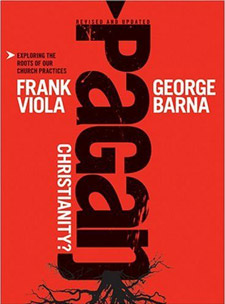
Finally, I feel like I have a moment to write about the chapter on tithing in Pagan Christianity by George Barna & Frank Viola. I loved this book. I couldn’t put it down. If I had the time, I would have read it from front cover to back cover in one sitting- all 275 pages. There are many people out there that are against tithing, but not as many understand the spiritual, as well as functional discrepancies that tithing creates within the church. Frank Viola understands the discrepancies and portrays them in this book very well.

The whole theme of Pagan Christianity is an exploration of the roots of our church practices. Frank Viola goes through a whole list of things, and of course the topic of tithing was the most exciting for me to read. Let’s just get to the meat. Viola says,

“Under the Old Testament system, tithing was good news to the poor. However, in our day, mandatory tithing equals oppression to the poor. Not a few poor Christians have been thrown into deeper poverty because they have felt obligated to give beyond their means.”

The church has not only wrongfully integrated the tithe into the Church system today, but they’ve taken away the power to its most essential blessing- to take care of the poor. First, the Church budget and its wants are put in position above the needs of the poor. Second, we require the poor to contribute 10% of the little money that they have, which worsens their situation. Let’s face it, i know God is all powerful, but he hasn’t promised a never ending supply of oil and flour to the poor, because he’s given us a responsibility to care for them ourselves.

This next quote from Pagan Christianity talks about clergy salaries and raises a very good point. I had never thought about this until it was mentioned here,

“A further peril of the paid pastorate is that it produces clergy who feel “stuck” in the pastorate because they believe they lack employable skills. . . All of the schooling and training had been dedicated to studying and preaching the Bible. While these skills are noteworthy, they are of limited appeal in the secular job market. The major hurdle they now face is forging a new career to support their families.”

Guaranteed, steady salaries that employ full time pastors can create many stumbling blocks. The above mentioned is one of them. Some things to think about. One, should pastors be a full time staff member, so that when the time comes to leave the ministry, that they can provide for their family with some experience in practical skills? Two, does their steady income and lack of practical skills keep them locked in the ministry regardless if God is calling them out? What if ministers are asked to step out because of sin, or whatever else? Then what? Tell me what you think?

Filed Under: Books & Publications Tagged With: frank viola, george barna, pagan christianity

Pagan Christianity: Part 2

04/18/08 by Jared Brian 8 Comments

I have already done an introduction to Pagan Christianity by Frank Viola & George Barna, so now I want to get into a little more of the book. besides the one chapter on tithing & clergy salaries, the book is not about stewardship, but I do think the book overall has made an important impact on my thoughts about the Church that I feel the need to write about it.

Without reading far into the book you get the notion that Barna and Viola are into the house church/organic church movement. What would anyone have against a biblically pure organic, home Church? One of the statements that caught my attention in the book was this,

“The Christianity that conquered the Roman Empire was essentially a home-centered movement.”

It strikes me because we think that the bigger our footprint on creating religious real estate, than the bigger influence we will have in our society. History disproves this theory. The first-century Christians turned the world upside down without the organizational and structural presence that we hold on dear today (Acts 17:6). Essentially what Frank Viola and George Barna are saying is, we don’t need this stuff like we think we do. Most of us think what would we do without a church building? The same goes for tithing. What would we ever do if everyone just gave as they felt led? We think everything would just fall apart.

Pagan Christianity basically takes everything we practiced about Church and throws it all away. It is very radical indeed. I think that we need something radical anyways. If you were smart you would keep your mind open to radical thoughts. When Jesus entered this earth, he was very radical. He took everything that the Jews knew about God and his laws and threw them out the door. This upset many people. The Jews had every reason to say, “but we’ve been doing it this way for 2,000 years. This man (Jesus) is a heretic.”

Put away the fancy clothes, the pews, the pulpit, the altar calls, the hymn books, the praise and worship team, the ushers, the 1-2-3 or 4-man pastoral show, the hype, the buildings, the fancy architecture, the high overhead, the order of the service, the outlined sermon, the religious hierarchy, the ordination & seminary requirements, the choir, tithing & clergy salaries. Put away all of that because it is not a biblical requirement. What do you have in Church beyond all of that? You have Church at the very roots of what God wanted it to be about. . . -Him.

One last quote from the book,

“Granted, Christ may be able to express Himself through one or two members of the church-usually the pastor and the music leader. But this is a very limited expression. “

You see what happens is we go to church, get comfortable, and we become spectators. Everyone does not have an opportunity to use their gifts and talents in the body. We are practically shut up. What Pagan Christianity is saying is that Christ is only expressed through the pastor or music leader when we come together, and this is not how God intended the Church body to function. Romans 12:6 says, “Having then gifts differing according to the grace that is given to us, let us use them” Also in Colossians 3:16, “Let the word of Christ dwell in you richly in all wisdom, teaching and admonishing one another in psalms and hymns and spiritual songs, singing with grace in your hearts to the Lord.” And in 1 Peter 4:11, “As each one has received a gift, minister it to one another, as good stewards of the manifold grace of God. If anyone speaks, let him speak as the oracles of God.” Lastly, in 1 Corinthians 14, we can see that God set up an order in the Church for prophesying and teaching.

Typically on Sunday when we come together, there’s only 1 or 2 people sharing, admonishing, or teaching. I think we all need an opportunity to share. Not just 1 or 2. The way our Church is structurally set up today does not stimulate growth and participation. Actually, it prohibits it. This is the heart of what Frank Viola is getting at in Pagan Christianity.

What do you think about the house church/organic church movement? Do you think there are some positives? Do you think there are some negatives?

Filed Under: Books & Publications Tagged With: frank viola, george barna, home church, organic church, pagan christianity

Pagan Christianity by Frank Viola & George Barna

04/16/08 by Jared Brian 3 Comments

Ever since I picked up the book, “Pagan Christianity” and read the first few pages I eagerly waited to write about it. Pagan Christianity is one of only a few books that I have read in my life that has profoundly changed me in the way I think about the Church. I am not the type of person that is easily persuaded or misled easily. I go about things with an open mind but am very, very skeptical and idealistic when it comes to revolutionizing thinking about the operation of the body of Christ. I also consider myself a creative individual but at the same time methodical. I say all that about myself because I think there’s a lot to say about the book that will strike its readers at the core of their creativeness, methodology, skepticism, and ideology. Pagan Christianity is not a book for the weak or closed-minded. Pagan Christianity is not for the careless or complacent person either. This book will offend everyone in some way, but with the truth presented so well by Frank Viola & George Barna you are left with no choice but to put away your offenses and eagerly read on.

For those who do not know what Pagan Christianity is about, here is an excerpt on the back cover that should give you a preface “Most of what present-day Christians do in church each Sunday is rooted, not in the new testament, but in pagan culture and rituals developed long after the death of the apostles.”

There are 12 topics discussed in this book

  1. Have We Really Benn Doing It by the Book?
  2. The Church Building
  3. The Order of Worship
  4. The Sermon
  5. Sunday Morning Costumes
  6. Ministers of Music
  7. Tithing and Clergy Salaries
  8. Baptism and the Lord’s Supper
  9. Christian Education
  10. Reapproaching the New Testament
  11. A Second Glance at the Savior

Consider these chapters the main categories because inside each of these chapters are even more specific sub-topics.

What Frank Viola and George Barna must have done is somehow wipe their memory of anything they can remember about the event we call “Church”. As they do that, they present historical facts and scripture to present the idea that we are pagan Christians. All our traditions, rituals, habits, and things that seem so normal have now been researched to show their roots in historical pagan culture.

As I was reading this book my mind was turning the whole time, “what’s wrong with that practice?…. How can we do without that?” But then I started thinking, “Well, why can’t we do without it?. . . there’s no reason that we must have it. . .Then why do I feel so tied to it?” Looking back I found myself defending and rationalizing our common traditions in the Church, but before long I began to ask myself why am I defending a practice that is not set in stone in the bible. Offended people are really just shocked people that have no real argument to stand with their feelings. Making a decision based on our offenses is probably the most blindsided thing that we can do, and I didn’t want to do that, so I read on with an open mind.

Pagan Christianity is the type of book that some would call, “throwing the baby out with the bath water”. Frank Viola & George Barna wipe the slate clean of what we understood to be the formula we call the Church event. You are left standing there just shocked, confused, and perplexed as everything you witnessed, and saw as Church is thrown out completely; and all that is left is an empty tub of just bare-bone fellowship and communion of a body of believers.

This book had an experience on me that I cannot express in enough words on this blog. I will bring more in the next few days because this was just my introduction to Pagan Christianity. I will probably write my thoughts about the chapters in the next post but plan on writing a different post just on tithing and the clergy salary. I would urge everyone to read this book. This is the book that people will love or they will hate. But I guarantee you cannot put this book down after reading and not somehow be shaken up by its pages. P.S. By the way if you purchase the book make sure you buy the revised and updated version.

Have any of you read Pagan Christianity? Has it impacted you at all? Or do you think it is not worth reading at all?

Filed Under: Books & Publications Tagged With: frank viola, george barna, pagan christianity

Blue Like Jazz by Donald Miller

03/27/08 by Jared Brian 2 Comments

I had someone recommend this book to me, “Blue Like Jazz” by Donald Miller. That was my first time reading one of his books. I guess I can say it was interesting. My friend, who recommended the book to me said that it changed a part of his life. It didn’t do that for me, but I think it did it for my friend because my friend lives his life exactly how Donald Miller lives his. Ironically, those who relate to an author the most (People who are already exactly like the author), are the ones affected by his writings and are changed. Don’t know how that makes any sense, but I understand what they mean.

Many people like the style of Donald Miller’s writings because Miller seems to admit out loud what most people are thinking in their heads. Personally, I don’t think that quality is rare. I think many people are very open. I get this vibe that Donald Miller’s thoughts in his book Blue Like Jazz, are provoked exaggerations of what the reality is inside his head. I think his mind wanders, and what he writes really happens in his mind, but I don’t think his thoughts can be taken seriously. They are just wonders. For instance, I can sit here and think about how I would contemplate suicide but not actually be thinking about killing myself.

I also get the vibe in Blue Like Jazz that Donald Miller likes indifference. Typically, that is not rare either considering 90% of people 25 and under are seeking an identity and seek something new, something unique, and maybe something rebellious. For instance, I came across his myspace page. On that page, his profile picture shows him with a cigarette in his mouth. Now, don’t get me wrong, my own mother smokes and has been for the past 40 years, but let’s face the practicality of smoking versus the stewardship of one’s body. I’m not going to go on a rant that smoking’s bad for you, but I am going to tell you that your creator has plans for your full life, and depriving your life of its full capability is showing you are a careless steward. Anyways, I bring that all up because one of my pet peeves is being indifferent for the sake of indifference. Sure you can find 100 excuses to smoke in order to fit in with the sinners and witness to them, but I have never seen anyone say I want to gain 400 pounds either in order to fit in with the glutenous, or even for that matter, I want to dress like a nerd so I can fit in with them to witness to them.

I don’t know why I’m going on this smoking rant, but I think I’m just gonna stick here for a while. You see the thing is with people like Donald Miller in Blue Like Jazz, is they love that people look at their smoking and see it as controversial. It’s a selfish desire. Smoking is about them, and how Christians in general will judge them based on some rolled-up leaves. Truthfully, the cigarette wouldn’t tell me at all that he’s a bad Christian, it just tells me that he’s a self-absorbed human like the rest of us. I think we all have our own rolled-up stogies in life. I don’t think I flaunt mine though. I don’t think flaunting our stogies is what God meant when he said that he would rather have you hot or cold. I admit my flaws, but I don’t want to flaunt them. Being open about your indifferences to the general Christian population may win you awards with certain people, but when has God called us to achieve satisfaction from people?

Yeah, I know we’re supposed to serve, and be relevant, but Jesus didn’t compromise his holiness in order to live among men. You are free to disagree with me about smoking and nicotine, and habits, but I think there’s something that we can gather from what I said above. Most of us live our life of sin much like a cigarette. We have these sins and typically we like to roll them up and hide them in a nice neat paper sheet. Personally, I like to keep my cigarettes in the pack, but many times in Blue Like Jazz, Donald Miller candidly wrote about whipping out the nicotine and smoking in front of everyone without any shame. Every Christian has had at one point say, “God, here’s my sins all rolled up”. What I’m trying to say is that we all have had to get them out in the open at one point, but I don’t think flaunting our burning cigarette of sins is a sweet-smelling savor to God.

A final note on Donald Miller’s book is I appreciate his candidness, and earnest heart, but being indifferent is much like paddling against the flow – you are just passing other people that have come from where you are going, and are thinking you are going somewhere new, just because you are traveling in the opposite direction.

Filed Under: Books & Publications Tagged With: blue like jazz, donald miller

T.D. Jakes – The Great Investment

11/21/07 by Jared Brian 5 Comments

I was just going through some things in my notes wondering what i should write about when i found this book that i forgot I read. “The Great Investment” is written by T.D. Jakes. It covers faith, family, and finances. I read through the book pretty quick, but slowed down in the chapters alluding to tithing. I have to admit i am skeptical of T.D. Jakes because of his flaunting financial situation, and expected to hear mostly a false teaching about health, wealth, and prosperity. There was some of that in this book, but not as much as i expected. He does recognize that you cannot give to get and that getting is not exactly a direct result of your giving, or of your spiritual condition. Here is a statement that i did like what was said in his book.

“God is a businessman. He is not going to do business with someone who shows no sign of potential return. He invests in people who demonstrate an ability to handle what He has given them.”

Now, does he mean that God owns a business? No, but he’s saying that God makes the right investments that a good business man would make. God is looking for those who have been good stewards. He will not leave precious talents to those who do not have the responsibility to handle them.

I am really trying to focus this whole blog about the responsibilities of stewardship. I’m not completely focused about tithing, or other charitable donations going in and out of the Church. Yes, i do spend a considerable amount of time and energy writing about it, only because i do believe tithing is the largest sore in the Church today.

If i were to sum up the word steward in one other word, i would say investor. I like the title of T.D. Jakes book, “The Great Investment”. If we look at our time, talent, treasure, as an investment option for when the King returns, America’s debt and financial problems would start disappearing. We wouldn’t be so concerned about the here and now. I’m not talking about investing in church buildings or anything like that, i’m talking about investing in people’s needs. The people have needs in America. But, take heed Church leaders, the biggest need is not another colossal worship center. Here’s a challenge for pastors: ask your congregation to write down the biggest financial need of their family, and i guarantee you won’t get one vote for a church building. It’s not even on their mind, until the pastor mentions it.

If the people, who are the Church, do not have a Church building on the top 10 list of needs, why is it always on the top list of the needs for the Church? You might think that is an impractical way of looking at it, but really is it that impractical?

In the stock market, you know what the most risky, volatile, but rewarding sectors is: Small Business. Most brokers feel safe putting their money in the large sectors like google’s, microsofts’, and apple’s, but when it comes to investing in small business it becomes risky. This is the way that our churches are thinking today. We want to invest in the big building, the big programs, and the big activities, because they are safe. In the end there is no small business investing going on so our individuals get overlooked. Investing in individual people is very risky if you ask me, but let’s face it, they have the most to grow.

Anyways, i didn’t really mean to go on a tagent there, it just happened. T.D. Jakes book had some good things, but of course there were some things i could pick out that i didn’t like. I don’t care if you think God’s called you to be prosperous. I don’t care if you think God’s called you to be a pauper, just remember that the richest king in the universe invested everything he had in the small business sector for you. So how should you invest and return it back to him?

Filed Under: Books & Publications Tagged With: finances, investment, prosperity

Should the Church Teach Tithing

10/08/07 by Jared Brian 15 Comments

I’ve been meaning to write about “Should the Church Teach Tithing” for some time now, but haven’t gotten to it. It’s one of the very first books i’ve read about the tithing debate. The writer, Russell Earl Kelly has a PH.D. and I believe for his doctoral dissertation he researched and wrote about this subject. The book itself is 288 pages and refutes many of the common tithing arguments mentioned by the contemporary Church.

Many people look at those who oppose the tithe as someone who just wants to be rebellious and go against God’s word. But I have corresponded with Mr. Kelly a few times and know that his heart is in tune with God and his Spirit. I am on board with Mr. Kelly’s thoughts and support his writings on the tithe issue. Mr. Kelly’s in-depth thoughts on this subject show that he is a very smart man. I quote him many times in my own writings.

This book is a deep read for most people. I had to read through it slowly in order to understand what was being said. Overall the read is very rewarding and is one of the best books out there refuting the demand for tithing. For anyone who is beginning to study the subject of tithing i would always recommend this book. If i were to give this book a star rating i would give it a 9 out of ten. I would give one more star, but as i said, this book seems more for the deep theologically minded person and lacks personal applications and challenges, as well as down to earth discussion. (Sorry Mr. Kelly :) )

Here is a link to his website
http://www.shouldthechurchteachtithing.com/

Filed Under: Books & Publications Tagged With: russell earl kelly, should the church teach tithing

  • « Go to Previous Page
  • Page 1
  • Page 2
  • Page 3
  • Page 4
  • Go to Next Page »

Primary Sidebar

Categories

  • Books & Publications
  • Church Financial Operations
  • Humor
  • News
  • Questions
  • Stewardship & Finances
  • Tithing & Giving
  • Videos

Recent Articles

  • Romantic Giving Book
  • Can The Church Be Supported Without Tithes?
  • Did Jesus Collect Tithes?
  • Jesus on Tithing
  • Tithing is for Scrooges

Stuff I Read

  • Bold Proclaimer 
  • Slave of The World 
  • Grace Roots 
  • Growing in Grace
  • Redeeming God
  • Russell Earl Kelly
  • Preparing His Way 
  • The Tithing Hoax

Footer

Popular Articles About Tithing

  • What Happens When We Don’t Tithe?
  • How Many Tithes Did Israel Pay in the Bible?
  • The Tithe Before or After Taxes
  • Bible Verses About Tithes
  • Is the Church a Storehouse to Collect Tithes?
  • Jacob’s Tithing Vow
  • What Did Jesus Teach About Tithing?
  • Non-Tithing Churches, Organizations, & Denominations
  • Why Did Israel Only Tithe Food?
  • Stop Tithing & Get Out of Debt
  • Jesus on Tithing
  • 13 Arguments Against Tithing
  • My Tithing Testimony
  • What is the Meaning of Tithing?

  • Sitemap
  • Contact
  • Privacy